





Make sure to total any sub-accounts or multiple entries for the same account, such as multiple invoices in accounts payable. Income statement accounts include Revenues, Cost of Goods Sold and Cost of Services, Expenses, gains, and losses. With Financial Cents, you can track every client task and project in one place, set and monitor deadlines to ensure nothing is missed, and automate client reminders to save time on follow-ups. It also allows you to see the workload across your team to prevent burnout, standardize processes with workflow templates, and maintain clear communication and accountability across your firm. Here’s a quick reference table that gives an overview of each type of trial balance.

Unlock the Future of Business Financial Management with Paystand
- Preparing the adjusted trial balance is no harder than taking the prepared TB and pushing through any applicable adjustments for the period not captured.
- The term ‘Trial Balance’ is derived from the perspective that it acts as a test for fundamental entries in the bookkeeping but does not perform a full audit.
- This is a preliminary step to make sure your numbers are correct before you create official reports.
- This ensures that all accounts reflect accurate balances, allowing for the preparation of financial statements.
- It’s prepared right after recording all transactions for the period, showing balances exactly as they are – no adjustments yet.
Bookkeepers typically scan the year-end trial balance for posting errors to ensure that the proper accounts were debited what is a trial balance and credited while posting journal entries. Internal accountants, on the other hand, tend to look at global trends of each account. For instance, they might notice that accounts receivable increased drastically over the year and look into the details to see why. Keeping your trial balance accurate helps you make smarter business decisions and simplifies year-end reporting. With tools that automate bookkeeping, you can spend less time on manual checks and more time growing your business. You can easily run financial reports and manage your finances with confidence using Xero.
- This means that the account balances in the trial balance are manually aggregated into the line items found in the financial statements.
- Note that while a trial balance is helpful in the double-entry system as an initial check of account balances, it won’t catch every accounting error.
- A balanced trial balance hints at no apparent accounting error, whereas discrepancies imply an error somewhere in the account balances.
- The goal is to confirm that the sum of all debits equals the sum of all credits and identify whether any entries have been recorded in the wrong account.
- To prepare a trial balance, the accountant must first list all of the accounts in the general ledger and their balances.
- Some important distinctions here must be made between a trial balance vs balance sheet.
- Later, when errors occur, they can be rectified through the suspense account.
Closing Liability Ledger Account
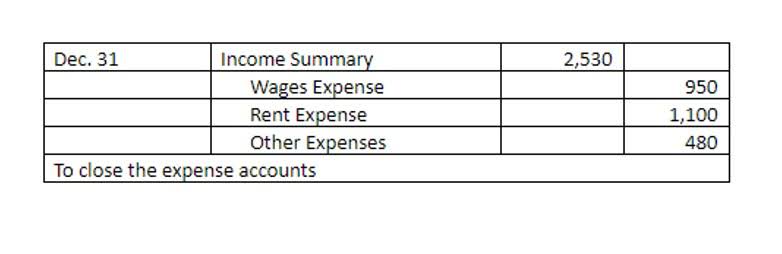
When GL activity is split across an ERP, https://www.defti.org.in/bookkeeping-manchester-bookkeeping-services/ billing, payroll, and bank tools, finance teams end up exporting CSVs, re-keying journals, and reconciling in spreadsheets. That creates a slow close, fragile controls, and low confidence in the numbers. Since transactions are not provided in the question, journalizing cannot be done here. We assist you in preparing the required information to help ensure a smooth and successful application process.
What is the difference between a general ledger and a trial balance?

It ensures your books are accurate, provides a foundation for financial reporting, and helps catch errors before they cause bigger problems. By using the trial balance, accountants can easily detect and correct any errors before preparing the financial statements. The accounts are then Online Accounting grouped into debit and credit columns, and the totals of each column are calculated.

The accounting cycle is a process that accountants use to record, classify, and summarize financial transactions. It is a series of steps that begins with the initial recording of transactions in the journal and ends with the preparation of the financial statements. But actually, even if the total of the debit balances agrees in value with the total of the credit balances, it still does not guarantee that there are zero errors in the accounting records. The term ‘Trial Balance’ is derived from the perspective that it acts as a test for fundamental entries in the bookkeeping but does not perform a full audit. It is the first step in checking or auditing business finances as it helps accountants to be sure that no mathematical error happens before proceeding with other complex financial statements. Before creating financial statements, accountants compile the company’s accounts using a trial balance of balances.
- You’ll need an understanding of accrual accounting to know what to adjust for but once you get the hang of it, you’ll see that a lot of the adjusting entries are similar.
- That’s why tools that help catch mistakes early are so important—and one of the most effective is the trial balance.
- This report serves as a crucial checkpoint for ensuring the accuracy and integrity of the financial data before proceeding with the preparation of financial statements.
- If it’s out of balance, something is wrong and the bookkeeper must go through each account to see what got posted or recorded incorrectly.
- A trial balance is essential, It acts as the initial step in identifying transaction recording mistakes.
- Bookkeepers or accountants will prepare a trial balance before issuing formal financial statements.
- It’s both a safeguard and a starting point, detecting errors while leaving room for improvement.